
What is HS? Information about Hidradenitis Suppurativa (HS).
What is HS? & What Causes HS?
Disclaimer
The information contained on this page does not necessarily reflect the personal views or opinions of Living Life With HS C.I.C. or its Directors. The following information is in line with the current best practices and views of HS held by the NHS (National Health Service) and BAD (British Association of Dermatologists). Furthermore, all the claims made cite real world research articles, shaping our understanding of HS in 2026. We strongly advise that you always conduct your own research and consult with healthcare professionals if you have any questions or concerns. The following page contains photographs of skin conditions, including graphic images of abscesses and inflammation. Please be mindful of this if you are uncomfortable viewing medical imagery.
Page Menu
Whether you are living life with HS, a friend or carer of someone who is, or a healthcare professional here to learn more, hello and welcome. Tyring to understand the complex nature of HS in order to be able to answer the questions “What is HS” and “What causes HS” is no mean feat. There is, thankfully, quite a lot of research to work with, but this site aims to stay true and stay away from all the “medical jargon” to provide people with the no nonsense answers they require, and deserve. That being said, different strokes for different folks and all that, that’s why we created a section for everyone.
We have split this page into 3 distinct sections, as follows. Please chose the one most appropriate and navigate there now.
Section 2
The HS House. For those who are trying to understand the “why” in more detail, without being overwhelmed.
Go to Section TwoSection 3
For those who need to understand in more detail. A super deep dive into the bleeding edge of HS research and current understanding.
Go to Section Three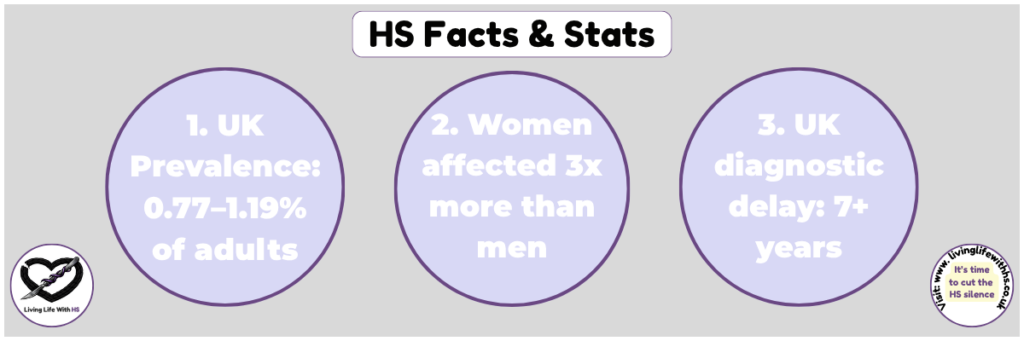
Number 1.
Detail: Among ~8 million UK adults, HS was diagnosed in 61,000–95,000. This means roughly 1 in 100 UK adults has HS, though many cases go undiagnosed.
Source: Clinical Practice Research Datalink (CPRD) study, UK’s largest primary care database (Read the CPRD study on PubMed)
Number 2.
Detail: Women:Men ratio consistently 2.5–3.5:1 across UK, Netherlands, Germany. Women often get milder disease but earlier onset.
Source: Dutch population cohort + multiple European studies (Read the gender-differences PDF)
Number 3.
Detail: UK patients wait 7-10 years on average from first symptoms to diagnosis.
Source: Office of Health Economics UK report (2023) (Read the OHE socioeconomic report (PDF))
Section One.
What is HS? (in a nutshell)
If you are reading this, there’s a reasonable chance that you’ve found this page because you’re confused about what is happening with your body and you feel you are not getting any answers from the healthcare professionals you meet. You might be tired of being told that what you have is “just boils” or “bad acne.” We are aware that this is an all too common outcome for people living life with HS in the UK & Ireland.
Do not despair. This page is designed to give you the lowdown, and if you want it, the deepest dive on the internet into all the current, evidence based information available about HS. The first step in being able to advocate for yourself is gaining a detailed understanding of HS. Not to tease, but before we try to answer “What HS is”, it may be equally important to state what HS is not, as some stigmas exist.
HS, is not contagious. You cannot catch it from someone else, and it does not spread through touch, shared towels, or being close to someone who has it.
HS is also not a sexually transmitted infection. That matters, because people sometimes assume anything affecting the groin must be linked to sex. HS is a skin condition, not an STI.
It is not caused by poor hygiene. That idea is common, but it does not fit what current research shows. A better way to think about HS is as a problem with the skin’s own inflammatory systems, rather than a “dirty skin” problem.
HS is a chronic, recurrent inflammatory disease that affects the body’s immune system. Unlike a simple skin infection, it is a complex condition that can form deep, painful lumps, nodules, and abscesses in skin-fold areas—most commonly the armpits, groin, buttocks, inner thighs, and under the breasts, although HS can occur anywhere on the body.
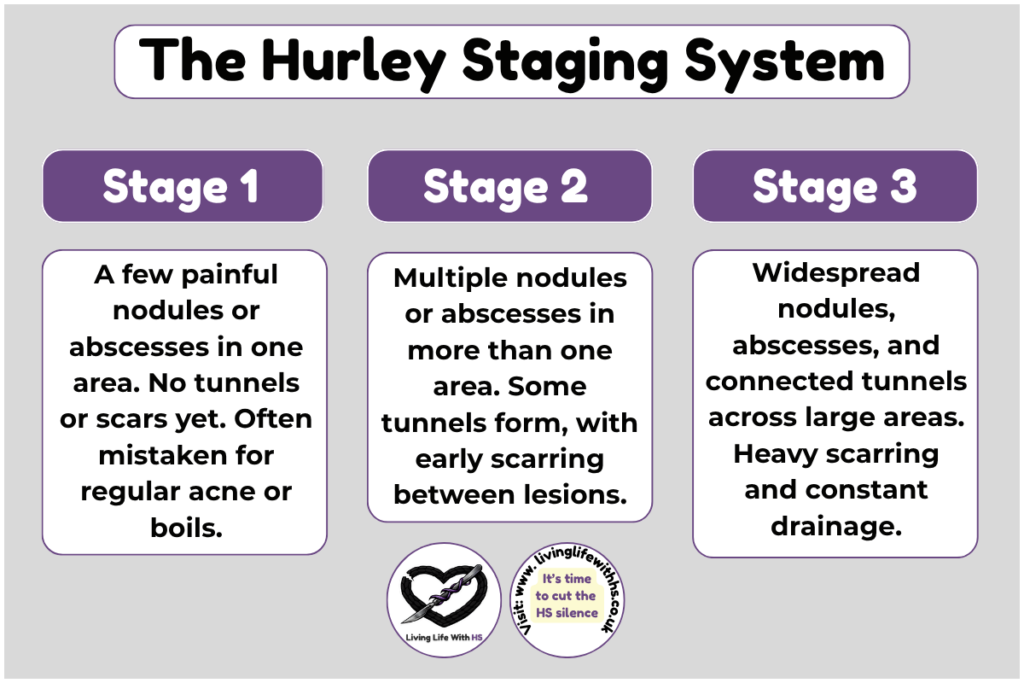
For many, these aren’t just one-off flare-ups. Over time, these recurring episodes can form persistent, draining tunnels under the skin known as sinus tracts. HS is categorised into three stages using something known as The Hurley Staging System, see below for more on that. Because awareness remains dangerously low, most people spend years navigating this pain in complete silence, feeling like they are the only ones dealing with a body that seems to be turning against them. We hope this page helps you regain some control of the situation.
Recognising the Signs
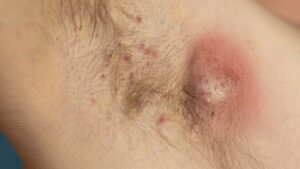
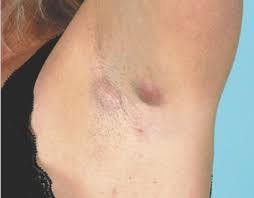
HS often manifests in ways that are easily mistaken for other issues. Below are examples of how HS typically appears in its early stages.
Could I have HS and if so, what to do next?
It goes without saying that we are not medically trained, that is why the following section is in line with the NHS, BAD (British Association of Dermatology) and NICE (National Institute for Health and Care Excellence) in terms of how HS is diagnosed.
The standard rule of thumb used for diagnosing HS is experiencing recurrent painful lesions (abscesses) at least twice in a 6-month period, specifically located in the characteristic areas; armpits, groin, buttocks, under breasts.
Does this sound like what you’re experiencing?
- Do the lumps start as deep, painful marbles under the skin?
- Are they occurring in the characteristic skin-fold areas?
- Does the pain persist even when the lump seems to “go away”?
If the answer is yes, you should contact your GP and push for the correct diagnosis. Forewarning – The reality is that many GPs have had very limited training on HS, often none at all, which often leads to misdiagnosis. A staggering fact is that the average diagnosis time for HS is around 7 years. Whilst it can be frustrating that the medically trained person sitting opposite you has no idea what HS is, this also presents an opportunity to take the lead in your own advocacy and put you on the best path for care as fast as possible.
To help you get the conversation started and ensure you are taken seriously, we have created a simple and clear Patient Information Leaflet for you to take with you. This saves you having to try and explain what you are experiencing and puts the relevant facts in the hands of the Healthcare Professional.
Starting off on a positive footing like this with a GP should enable you to make smother progress to treatments only available through certain NHS pathways.
Here is how to take control of your next appointment:
1. Download and store the digital copy on your phone/tablet, or print the leaflet below. (Opens in a new tab)
2. Try to book a double-appointment with your GP, if possible, to give yourself enough time to have a detailed discussion.
3. Take the leaflet with you and hand it to your GP/show it to your GP on your phone or tablet at the start of the visit. This should enable the appointment to flow smoothly and give you a platform to be able to ask any questions you may have.
Understanding HS Severity: The Hurley Stages
The Hurley Staging System, created by Dr. James Hurley in 1989, is the standard way doctors classify HS severity based on
the number, type, and spread of lesions. It helps guide treatment decisions and track disease progression.
Section Two – A Deeper Dive Into HS and it’s causes – Understanding the “HS House”
If you have lived with HS for a while, you know how unpredictable and frustrating it can be. To understand why your body behaves this way, it helps to stop looking only at your skin and start looking at the “systems” beneath it. Imagine your body is a dilapidated house; it doesn’t become this way overnight and there isn’t just one factor making it so. Much like HS, which manifests itself when several of its core systems stop working in harmony.
What we know, according to current research:
Research into HS has exploded in recent years. We have moved past the idea of a single “cause” and now recognise HS as a systemic, multifactorial condition. Leaning in on the “HS is a dilapidated house metaphor”: when it starts to develop structural issues, it is rarely due to one isolated incident, like a single broken window. Instead, it is a chain reaction—faulty wiring (Genetics), blocked pipes (Follicles), and creeping damp (Microbiome)—all feeding into one another to cause a much larger problem.
Whilst it may seem peculiar to think of yourself, or HS as a dilapidated building, thinking in this way helps us to get our head around several complex systems, all working alongside each other and in some cases against each other. Many of us don’t have a PHD in medical science, however, we are forced to learn if we would like to gain some semblance of control. Thats why we have broken down the current 2026 understanding into 7 core contributing factors. The image below explains more clearly.
Prefer to get skip this lite version and get straight into the weeds? You can dive into the full fat version of this section now by clicking here and skipping ahead to section three.
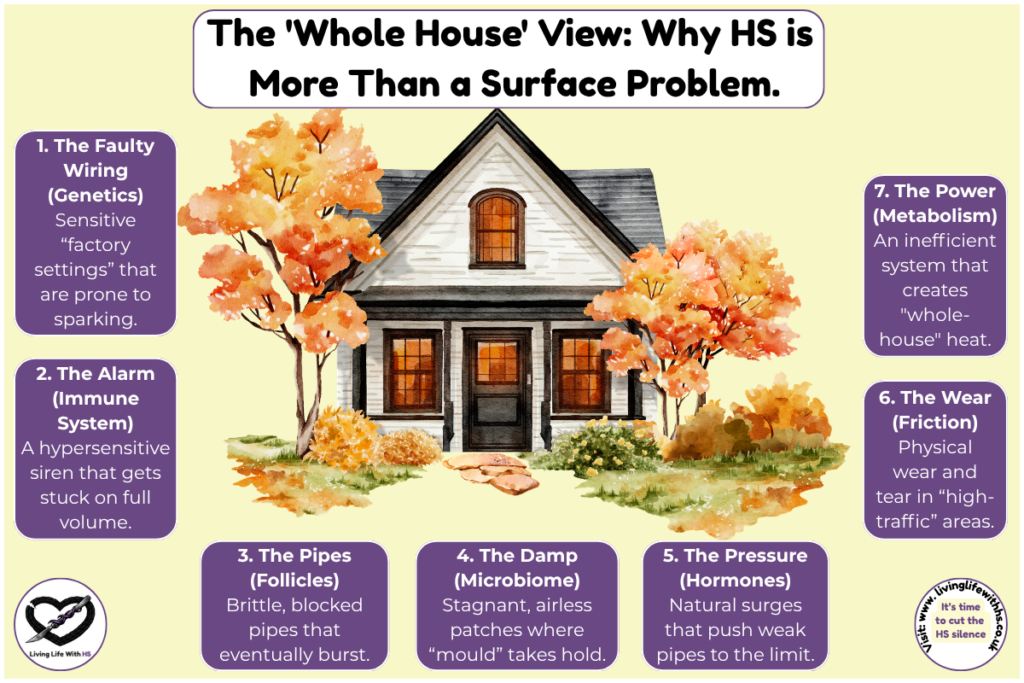
1. The Wiring (Genetics)
You aren’t “unlucky” or “unclean”—your house was simply built with a very sensitive electrical system. These are your “factory settings.” For some people, this sensitive wiring runs in the family. It means your body is naturally “primed” to react more intensely to stress or irritation than someone else’s might.
2. The Smoke Alarm (The Immune System)
Because your internal wiring is so sensitive, your house’s smoke alarm is prone to “glitching.” In a healthy house, the alarm sounds only when there is a real fire. In an HS house, the alarm is set to “maximum sensitivity.” It hears a tiny spark in the wiring and starts screaming at full volume. The problem is, it doesn’t know how to switch itself off, leaving your system in a state of constant, high-alert irritation.
3. The Pipes (The Hair Follicle)
HS isn’t a “clogged pore” problem; it’s a plumbing problem. Think of your hair follicles as the pipes in your house. In HS, these pipes develop a structural build-up—much like limescale—that makes the walls narrow and brittle. Eventually, the pipe can no longer handle the internal pressure and it bursts behind the wall. This internal “leak” is what creates the painful lumps we associate with a flare.
4. The Damp and Mould (The Microbiome)
When a pipe leaks behind a wall, the air becomes stagnant and damp. This creates the perfect environment for “mould” (unwelcome bacteria) to take hold. It’s important to know that this isn’t about hygiene—you can’t scrub this away. It’s an environmental issue. The bacteria thrive because the “pipes” are leaking, and their presence keeps the smoke alarm going off even longer.
5. The Water Pressure (Hormones)
Natural shifts in your body—like puberty, pregnancy, or your monthly cycle—act like a sudden surge in your home’s mains water pressure. In a healthy house, the pipes handle this surge easily. But because the pipes in an HS house are already brittle and narrowed, this extra pressure is often what forces the existing weak points to finally give way.
6. The Wear and Tear (Friction)
We all have “high-traffic” areas in our homes—the hallways and doorways that get used the most. In your body, these are the areas where skin rubs against skin or clothing. Because the “pipes” are already fragile, the constant physical “wear and tear” in these high-traffic zones is often the final nudge that causes a weakened follicle to rupture.
7. The Power Supply (Metabolism)
Think of your metabolic health as your house’s central boiler. When the boiler is running efficiently, the house is stable. But when the system is struggling to process fuel, it creates “noise” and “heat” throughout the whole building. This systemic stress makes every other issue—from the wiring to the plumbing—feel much more aggressive and harder for the body to settle down.
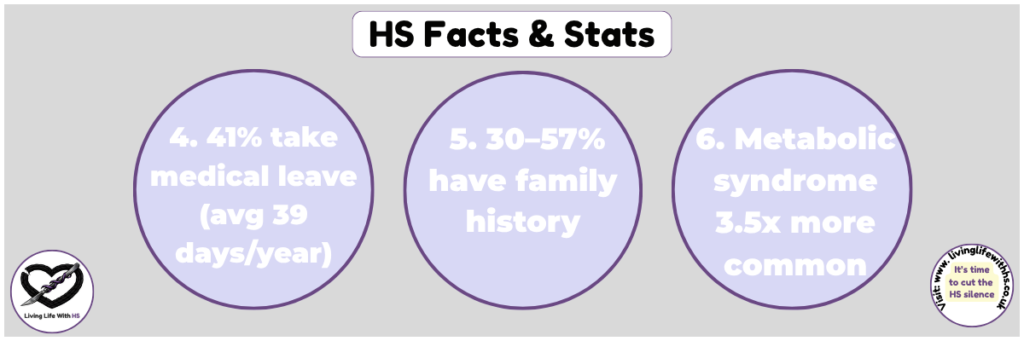
Number 4.
Detail: 41% absenteeism rate. HS patients lose 2.3x more workdays than controls (18.4 vs 7.7 days/year). 26.6% productivity loss even when at work.
Source: BJD productivity study + European work impairment data (2020) (Read the BJD productivity study)
Number 5.
Detail: 49.5% had a first-degree relative (parent/sibling/child) affected. 77% heritability in Dutch twins. Family risk = 20x higher than general population.
Source: BJD familial risk study + Dutch twin cohort (Read the familial risk study (PMC))
Number 6.
Detail: 3.5x higher prevalence vs. matched controls. Independent of smoking. Dose-response: more metabolic components = worse HS.
Source: BJD comparative study (n=3207 patients) (Read the BJD comparative study)
Section Three – A Super Deep Dive into HS and its causes.
(Pour yourself a strong coffee…)
What HS is, according to current research.
What we do know about HS is this: HS is a long-term inflammatory skin disease and the most up-to-date research suggests that the cause is multifactorial. That means it develops from several internal systems interacting, rather than one single cause.
Think of your body as a complex, interconnected house. When a house starts to develop deep, structural issues, it is rarely down to one isolated incident, like a single broken window. Instead, it is a combination of underlying factors—faulty wiring, blocked plumbing, and creeping damp—all feeding into one another to cause a much larger problem. HS works in exactly the same way.
Over recent years, several areas of research have given us a much clearer understanding of some of these interconnected systems. Below, we break down these core factors. For those with a more curious nature we have provided links to the published research articles so you can read the full papers, should you wish.
We’ve worked hard to trawl the net to find published papers, read them, digested them and break them down for you on this page. We’ve tried to cover this topic comprehensively without intending to overwhelm anyone. To do this, we’ve put everything we have found into 7 contributing factors. There may well be more, but this page leans heavily on medical publications and published research, so do not take this information page to be an exhaustive list.
We know more now in 2026 than we have ever known about HS, yet we also recognise that there is an enormous amount of work still to be done before we can conclusively say what causes HS.
The Factors
1. Genetics: The Underlying Wiring
You aren’t just “unlucky.” Research now confirms that HS has a strong genetic component, meaning your DNA plays a significant role in your predisposition to the condition. Think of it as your body’s factory settings.
Does HS run in the family?
Yes, it frequently does. Studies show that around one-third of people with HS report a family history of the condition. If you have HS, it is common to wonder about the risk to your children or other relatives.
- How it is inherited: In some families, HS can appear to follow a pattern called Autosomal Dominant inheritance, especially when specific gene variants (like NCSTN or PSEN1) are involved. This means that if one parent carries a specific genetic mutation, there is a chance it can be passed directly to their children. However, for most people, HS is not explained by a single inherited gene. Instead, it is usually polygenic, meaning it’s the result of many small genetic variations interacting with one another.
- Important nuance: Inheriting the marker does not guarantee you will develop the symptoms, but it does mean your body is “wired” to be more sensitive to the triggers that cause HS to flare. (More Information: MedlinePlus)

The Fuse Box: The Gamma-Secretase Complex
Think of your genetics as the original electric wiring of your house. Most people are born with “standard” wiring that handles stress, friction, and hormones without a hitch. However, research has identified that many people with HS have variations in a group of proteins called the gamma-secretase complex.
This complex acts like the automated control system for how your hair follicles grow and how your skin cells renew themselves. When this specific wiring is faulty, it acts like a frayed wire behind the walls—it is unstable and prone to “sparking,” triggering a cascade of inflammation that the body then struggles to switch off (Deep dive: PMC8491499)
Why it’s “Polygenic” (Not just one “bad” gene)
It is tempting to look for a single faulty wire that causes HS, but the reality is more nuanced. HS appears to be polygenic, meaning it is usually the result of multiple small genetic variations interacting with one another, rather than one single major fault.
This is why two people in the same family might both carry the genetic predisposition for HS, yet one might have mild symptoms while the other experiences severe, stage-three disease. Other factors—such as your unique environment and immune response—interact with the underlying wiring issues to determine how the disease actually shows up in your life. (Recent evidence on genetic pathways: PMC10886623)
Familial Risk (Br J Dermatol): A meticulous study quantifying the risk for first-degree relatives.
Genetic Mapping (JAMA Dermatology): Examining the patterns of inheritance across large cohorts.
Clinical Genetics Overview (PubMed): An up-to-date look at the complex genetic architecture of HS.
2. The Immune System: The Faulty Smoke Alarm
If genetics represents the faulty, fraying wiring of your house, your immune system acts as the smoke alarm designed to detect danger. In a healthy house, the alarm stays silent. But because your genetic “wiring” is prone to constant, tiny electrical sparks of inflammation, the alarm is repeatedly set off—until it eventually becomes stuck on at full volume, even long after the burnt crumpet has been removed from the toaster and the smoke quickly wafted away. The “noise” your immune system is making—specifically through an over-production of inflammatory proteins like TNF-α, IL-17, and IL-23—keeps your skin in a state of constant, high-alert irritation.
Current research widely considers HS to be an autoinflammatory disease. Unlike an autoimmune condition where the body attacks its own organs, an autoinflammatory disease means your innate immune system—the body’s first, rapid-response line of defence—has misfired. It continues to trigger these inflammatory “alarm” signals even when no actual infection is present. (Clinical reference: BJD 2015)
This is a continuous feedback loop: the immune system signals for more inflammation, which causes skin cell distress, which in turn signals for even more inflammation. You aren’t fighting an external infection; you are fighting an internal system that has forgotten how to switch itself off. (Deep dive: Karger 2024), Frontiers 2018)
BJD 2015: Evidence on the roles of IL-17 and IL-1β in driving HS inflammation.
Karger 2024: An analysis of the cytokine feedback loops (IL-17/IL-23/TNF-α) that sustain the disease.
Frontiers 2018: A technical breakdown of the Th17 pathway and inflammasome activation in HS.
3. The Follicle: The Blocked Pipes
We have moved past the old, simplified myth that HS is just a clogged pore or a hygiene failure. Modern clinical research shows that the story of HS really begins deep within the hair follicle itself. Think of each follicle as a tiny, specialised pipe in your house’s plumbing. In a healthy system, this pipe allows hair and natural oils to exit freely. In HS, however, the cells lining this pipe—known as keratinocytes—don’t behave the way they should.
Think of it like a pipe that is being choked from the inside.
These cells produce an abnormal build up of keratin (the protein that forms hair and skin). This process, known as follicular hyperkeratosis, means the pipes walls become thickened, narrow, and incredibly fragile. (Clinical reference: PMC9326614)
As the blockage builds, pressure mounts beneath the surface. Eventually, the follicle wall—already weakened—can no longer withstand the internal force, leading to a follicular rupture. When this happens, it bursts, spilling the contents of the follicle—oils, bacteria, and dead cell debris—directly into the surrounding, delicate skin tissue. (Clinical reference: PMC9368759)
This rupture is the ground zero of an HS flare. It’s not just a surface breakout; it’s an internal spill that triggers that massive immune “smoke alarm” response we described earlier. By the time you feel that painful, throbbing lump, your body is already fighting to contain an internal rupture that has turned the surrounding area into an inflammatory battleground.(Clinical reference: PMC8361883)
PMC9326614: A systematic review of tissue changes confirming follicular occlusion and hyperkeratosis.
PMC9368759: Detailed breakdown of how follicular rupture initiates the immune cascade.
PMC8361883: Key paper identifying HS as an autoinflammatory keratinization disease.
BJD 183/6/999: A seminal British Journal of Dermatology review on the pathway from follicular changes to inflammation
PubMed 27206704: Evidence that HS keratinocytes are intrinsically abnormal and overproduce inflammatory signals.
PMC10389144: Research on how follicular structures activate the inflammasome (the “smoke alarm”).
Frontiers in Medicine: An exploration of the rupture cascade
4. The Skin Microbiome: The Damp and Mould
Your skin is not a sterile surface; it is a thriving ecosystem, host to trillions of beneficial bacteria, fungi, and viruses that act as your first line of defence.
Think of your skin’s microbiome like the internal environment of your house. A healthy home has good air quality and balanced humidity. In HS, however, the environment shifts. When the house has blocked or leaky pipes (blocked follicles – as we saw in factor 3), it creates pockets of low oxygen—a damp, stagnant environment where healthy air can’t circulate.
In these damp conditions, beneficial bacteria that thrive in healthy air begin to disappear. Instead, unwelcome, opportunistic, anaerobic (non-oxygen-breathing) bacteria—like Prevotella, Porphyromonas, and Peptoniphilus—take over. This is the biological equivalent of mould taking hold in a damp wall. (Clinical reference: PMC9570026)
This shift, known as microbial dysbiosis, is not just a symptom; it’s a driver. Research has shown that these bacterial imbalances can be present even in “unaffected” skin, suggesting that the house’s internal climate is primed for stagnation long before the mould becomes visible. (Clinical reference: PMC7075718)
This explains why standard antibiotics often struggle to provide long-term remission. They are like trying to scrub mould off a wall with bleach; it might look cleaner for a moment, but if you don’t fix the underlying leaks (the follicular environment) and the dampness, the mould will always find a way to return. (Clinical reference: PMC9368759)
PMC9326614: A 2026 review on biofilm formation and the role of anaerobic bacteria in HS.
PMC7075718: A pilot study showing distinct bacterial signatures associated with disease severity.
PMC9570026: A synthesis paper detailing the shift from healthy skin commensals to pathogenic bacteria.
PMC10217408: A recent deep-dive into the link between microbiome changes and skin inflammation.
Acta Derm-Venereol (25634691): An important look at how even clinically unaffected skin shows bacterial changes.
Frontiers in Microbiology: Emerging research exploring whether the gut microbiome may also influence HS severity.
5. The Hormones: The Water Pressure
Let’s be honest: metaphors are helpful for visualizing complex ideas, but human biology is far more intricate than any plumbing system. Hormones are vital, life-giving signals for your entire body—they don’t just “cause” disease. However, when we are trying to understand why HS flares happen when they do, thinking about hormones as “water pressure” is a very effective way to picture what is happening in your skin.
Think of your hormones as the mains water pressure running through your house. Under normal conditions, a healthy system handles the flow easily. But for those with HS, the “pipes” (your hair follicles) are often structurally compromised. When your body experiences natural hormonal shifts—around puberty, or worsens during pregnancy, or your monthly cycle—the “pressure” in the system rises. It doesn’t break a healthy pipe, but it pushes your compromised system to its limit, forcing the existing weak points to finally give way.
It’s about cellular sensitivity, not just levels.
The research indicates that it’s not necessarily that your hormone levels are “abnormal,” but rather that your skin cells are hyper-sensitive to them. Studies have shown that HS skin cells (fibroblasts) can show increased androgen receptor expression, meaning they react more aggressively to circulating hormones like DHT than healthy skin cells would. This reaction adds fuel to the fire, amping up the inflammation we see in the follicles (Clinical reference: PMC6551033)
While the exact interplay is still being mapped, the clinical evidence is clear: HS often begins around puberty—alongside menstrual flares, which strongly confirms that hormones are a central part of the HS puzzle. (Clinical reference: PMC8467309)
By viewing hormones as a pressure gauge, we can better understand why treatments that modulate the endocrine system (like certain contraceptives or anti-androgen therapies) provide relief for some patients, even when their blood tests appear “normal.” It isn’t about fixing a hormone imbalance; it’s about reducing the pressure on a system that is currently overreacting.
BJD 2021 (PMC8467309): A comprehensive look at the pathogenesis of HS, highlighting peripubertal onset and cycle-related flares.
European Society of Endocrinology (PMC6551033): Evidence of direct cellular response to androgens (DHT) in HS tissue.
Dermatology and Therapy (2016): A systematic review of androgens and estrogens, contextualising the “hormonal trigger” theory.
Journal of Family Medicine and Primary Care (PMC8797099): A broad review of etiology and pathogenesis across global populations.
JDD Online: An update on hormonal therapy strategies for clinical management.
6. Friction: The Structural Wear and Tear
While HS is fundamentally an immune-driven disease, it is also a disease of mechanics. The characteristic locations of HS—the armpits, groin, buttocks, and under the breasts—are not random. They are the body’s “intertriginous” zones, where skin constantly rubs against skin, clothing, or straps.
Think of these areas as the “high-traffic hallways” of your house. Because these parts of the body are constantly in motion, they experience far more wear and tear than anywhere else.
Your hair follicles are already genetically predisposed to dysfunction (as we saw in factors 1 & 3). In these high-friction areas, the physical forces of shear, pressure, and rubbing create “micro-trauma” at the follicle wall. In healthy skin, this minor stress is inconsequential. In HS, however, this mechanical stress acts as a “second hit.” It weakens the already fragile follicle wall, leading to a rupture that spills contents into the dermis and triggers the immune cascade we discussed. (Clinical reference: PMC7557497)
It isn’t just skin-on-skin.
Recent studies have shown that mechanical stress from external factors—such as tight-fitting clothing, bra straps, or belts—can induce HS lesions in locations that don’t traditionally have high skin-on-skin friction. This confirms that it is the mechanical force itself that destabilises the follicle. When the skin’s natural lubrication is reduced or the pressure is too high, the hair follicles are essentially “crushed” into occlusion, accelerating the rupture process. Put simply, this means that it isn’t just skin rubbing against skin that causes an issue. Anything that exerts pressure—like a tight waistband or strap—is effectively pinching the “pipe” beneath the surface. When that pipe is already fragile, because of factors we’ve already covered, that external squeeze is often enough to make it give way. (Clinical reference: JAAD 2024)
This is a key reason why your HS can seem so erratic; it is a battle between your internal genetic wiring and the external environment you move through every day. Understanding this is why “wear loose-fitting clothing” is standard advice—not because wearing tight clothes cause HS, but because reducing mechanical pressure gives your follicles one less reason to rupture.
Acta Dermatovenerologica Croatica (30390729): Case studies confirming that mechanical pressure (like bra straps or belts) can induce lesions in non-traditional sites.
Dermatology and Therapy (26617356): Explains how specific shear and friction forces in intertriginous areas create the unique environment for HS
Experimental Dermatology (33155312): The “two-hit” model: explains the requirement for both genetic predisposition AND local mechanical trauma.
JAAD 2024: A 2024 look at extrinsic factors, focusing on the role of mechanical injury and reduced skin lubrication.
7. The Metabolic Amplifier: The House’s Central Power System
Beyond the mechanical triggers and genetics, recent research has identified a consistent link between HS and metabolic health. It is critical to understand that this is not about “blaming” an individual’s lifestyle. Instead, it is about how the body’s central “power supply” influences the overall inflammatory state of the entire house.
Think of metabolic health as the energy efficiency of your home.
If the immune system is the “smoke alarm” and the ruptured follicle is a “burst pipe,” your metabolic state—how your body processes insulin and glucose—acts as the central power system. When this system is running efficiently, everything stays stable. But when your body struggles to manage insulin effectively, the power supply becomes “dirty” or inefficient. It pumps excess heat and “static” (pro-inflammatory signals) into every room of the house. (Clinical reference: BJD 2015)
The Adipokine Cascade
Adipose (fat) tissue is not just a storage unit; it is a biologically active organ. In HS, this tissue often becomes a significant source of adipokines—signalling molecules that ramp up inflammation. These signals don’t stay in one area; they travel through your system, creating a state of “whole-house” stress. This explains why HS is so often linked to other metabolic conditions; the underlying inflammation is affecting the system’s ability to remain calm, not just the skin on the surface. (Clinical reference: PMC10886623)
The Insulin/Hormone Feedback Loop
New research into insulin-glucose homeostasis has revealed a direct link between insulin resistance and HS severity. When your body struggles to manage insulin, it can cause a spike in your ‘water pressure’ (the hormonal signals we discussed earlier), which in turn feeds the very skin cells that are prone to rupturing.
Basically, everything in the house is connected. Your metabolic system and your hormonal ‘water pressure’ work together. When one is under strain, it places a burden on the other. By understanding that HS is this ‘whole-house’ event, we can stop looking for one single ‘broken wire’ and start looking at how to settle the entire system down. (Clinical reference: PMC11990022)
- BJD 2015 (3.5x metabolic syndrome prevalence): Definitive data on the prevalence of metabolic syndrome in HS cohorts.
PMC11990022 (2025): The latest research on insulin-glucose homeostasis and its role as a key endotype in HS.
PMC12578112 (2025): Evidence linking severe HS to long-term cardiometabolic events.
Frontiers in Endocrinology (2024): A Mendelian randomization study exploring the potential causal links between metabolic dysfunction and HS.
JAAD 2024: How adipokines and metabolic factors amplify lesion severity.
Experimental Dermatology (2021): The role of adipokines in driving Th17-mediated inflammation.
JDD Online (2023): How insulin cycles feed into the androgen cascade.
PubMed (2017): Analysis of the dose-response relationship between metabolic markers and HS.
Disclaimer: The Living Life With HS website and the views displayed on it are not those of a medical professional. The information and stories on this website are based on personal experience(s) and are for informational and community support purposes only. This content is not a substitute for professional medical advice, diagnosis, or treatment. Always seek the advice of your GP or other qualified health provider with any questions you may have regarding a medical condition.